Padre Copy Trading: How to Mirror Wallets Safely
How copy trading works on Padre Terminal: picking wallets worth copying, the size and cap settings that contain losses, and the mistakes that empty accounts.
Copy trading is the Padre feature most likely to make a beginner money in week one and lose it in week two. It works exactly as advertised: pick a wallet, set a size, and Padre mirrors its buys and sells from your wallet. The problem is never the tool; it is picking the wrong wallet and sizing like it is your own idea. Here is how we run it.
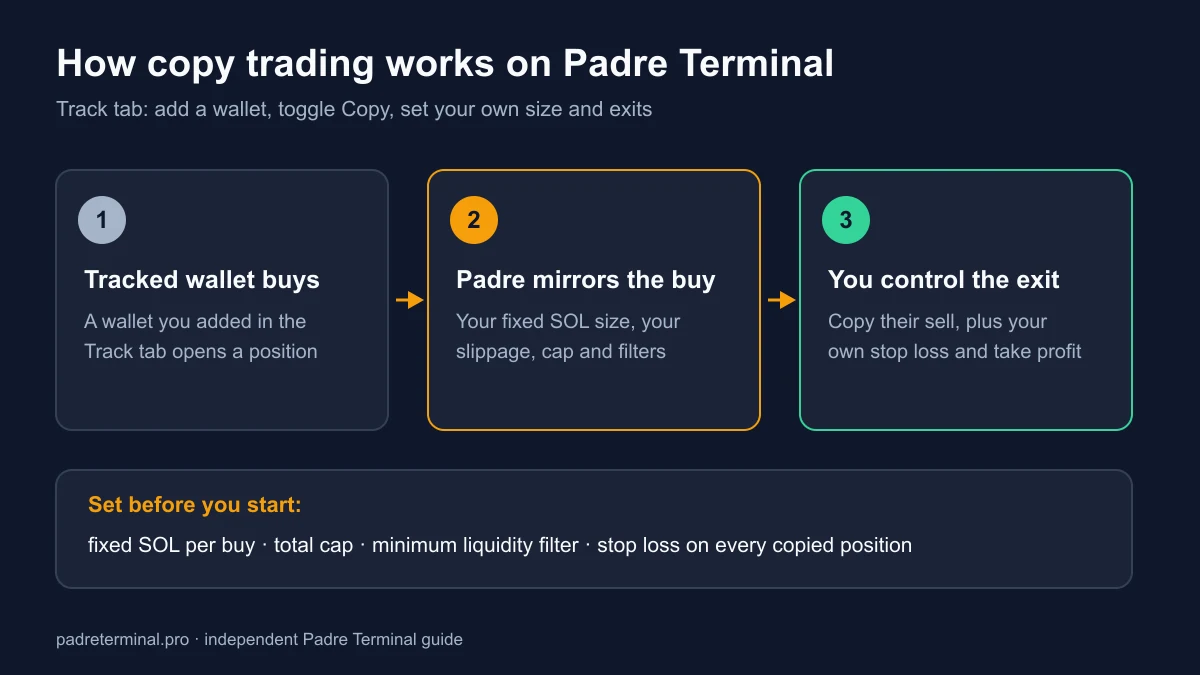
How copy trading works on Padre
- Open Track and add a wallet address (Solana or EVM, per chain).
- Toggle Copy on that wallet.
- Set the amount per buy (fixed SOL, not a percentage of the target's size), a total cap, and optionally minimum liquidity and market-cap filters.
- Choose whether to copy sells proportionally (recommended) or manage exits yourself.
When the target wallet buys, Padre submits your buy within the same block or the next one, with your slippage and priority settings. Fees are the normal platform fee per swap, so cashback applies.
Picking wallets worth copying
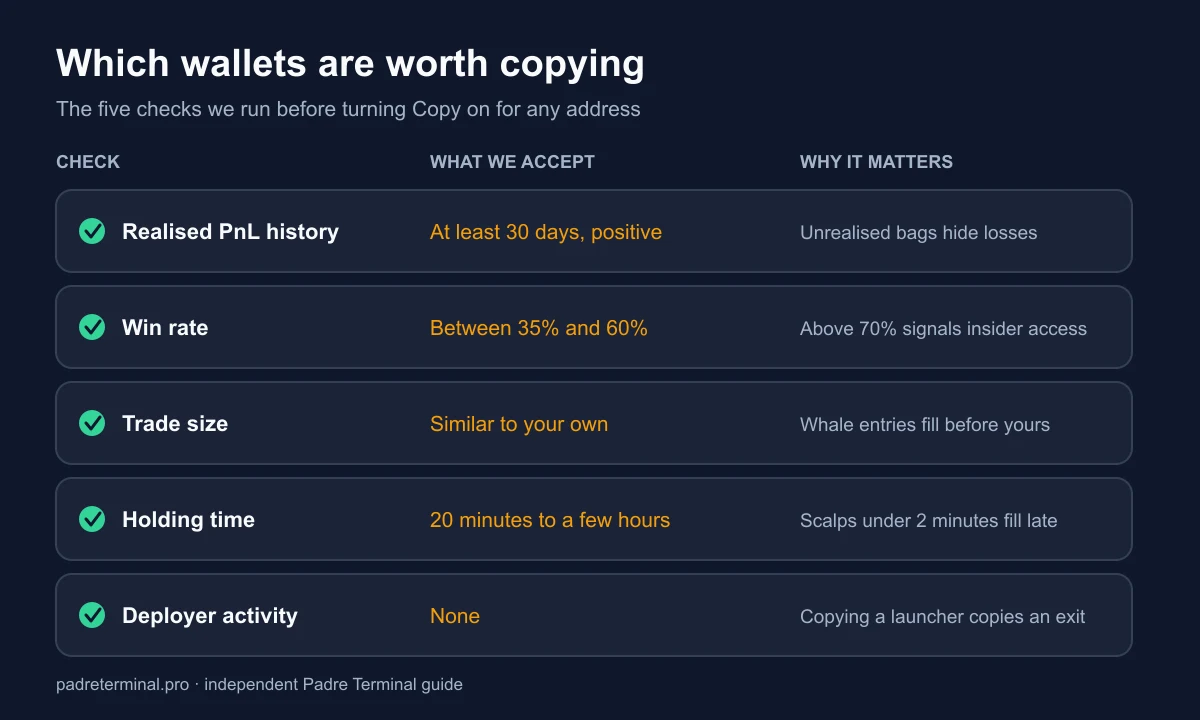
Most "top trader" lists are noise: one 50x win hides forty losses. Before copying anyone we check, on Solscan or in Padre's wallet page:
- At least 30 days of history with a positive realised PnL, not just unrealised bags.
- Win rate between 35% and 60%. Above 70% usually means the wallet is an insider or a bundler and their entries are not reproducible from outside.
- Trade size similar to yours. A whale moving 200 SOL moves the price; your 0.5 SOL copy fills after the pump they caused.
- Holding time. If they scalp in under two minutes, your copy will be late on both sides. Prefer wallets holding 20 minutes to a few hours.
- Not a deployer. If the wallet funds token launches, you are copying an exit strategy.
Sizing that keeps you alive
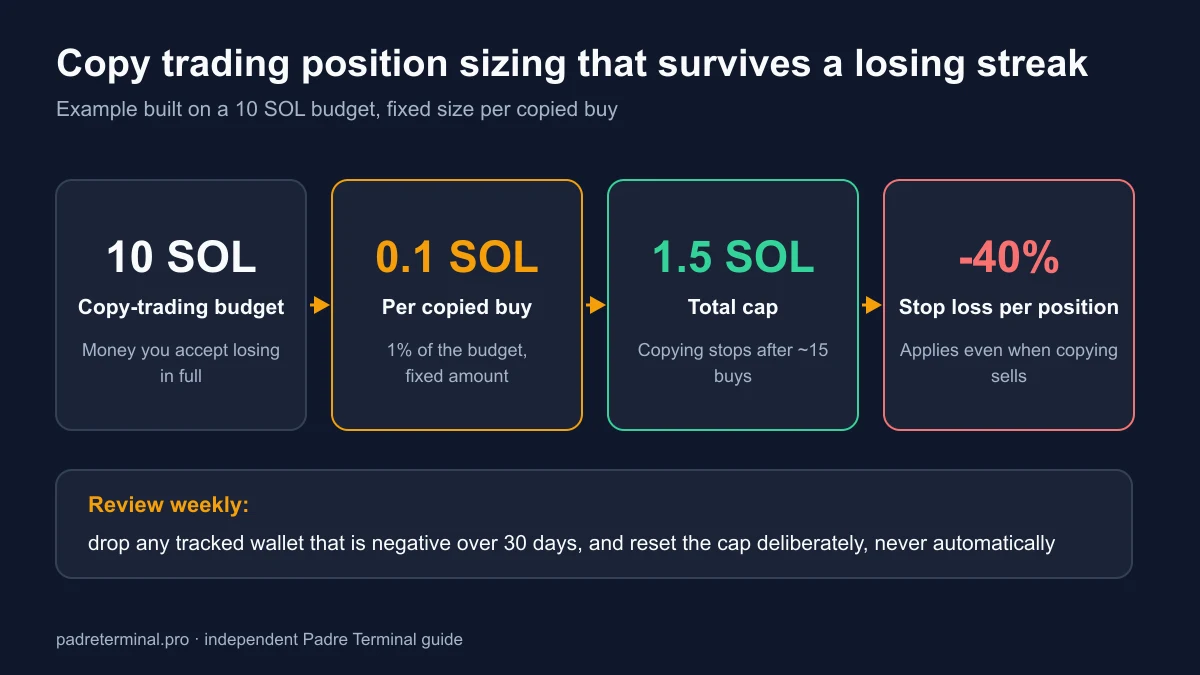
Our rule: per-buy amount = 1% of the capital you are willing to lose entirely, and the total cap = 15 buys. A 10 SOL copy-trading budget means 0.1 SOL per buy, cap 1.5 SOL. After the cap is hit, Padre stops copying until you reset it, which forces a review instead of a slow bleed.
Set a minimum liquidity filter (we use $30K on Solana) so that copies skip tokens where your own order would be a meaningful share of the pool.
Exits: copy sells or set your own
Copying sells proportionally is safest for beginners: you leave when they leave. Two caveats. First, if the target sells in many small pieces, you pay a platform fee on each. Second, if they hold through a 90% drawdown, so do you. We copy sells but also add a hard stop loss at -40% on every copied position; if a trader you follow regularly sits through -40%, stop following them.
Five ways people lose money copy trading on Padre
- Copying a wallet from a Telegram "alpha" group. The group owner often is the wallet and sells into the followers.
- No cap. A wallet that goes on a losing streak takes your whole balance with it.
- Copying with high priority fees on every trade. Costs add up; use Medium unless the network is congested.
- Copying five wallets at once. Correlated buys on the same token multiply exposure. Two or three uncorrelated wallets is plenty.
- Never reviewing. Check copied PnL weekly and drop any wallet negative over 30 days.
The alternative: track, don't copy
For many traders the tracker without copying is more profitable. You get the alert, you look at the token page and run the checklist, and you decide. It is slower, but you skip the trades where the copied wallet was clearly front-running its own followers.
Setup for the tracker and the rest of the interface is in the step-by-step trading guide. Fee impact of frequent small copies is covered on the fees page.
copy tradingwallet trackerPadre trade